
Houston Boom Barriers & Traffic-Arm Gates
Move More Cars, Not More Guards.
A boom barrier is the fast, tireless arm that meters vehicles through a parking deck or access lane — up in about a second, down behind every car. If your bottleneck is throughput, not intrusion, this is the gate you want. Here’s how to spec one for your Houston lanes, and how we install it to lift clean thousands of times a week.
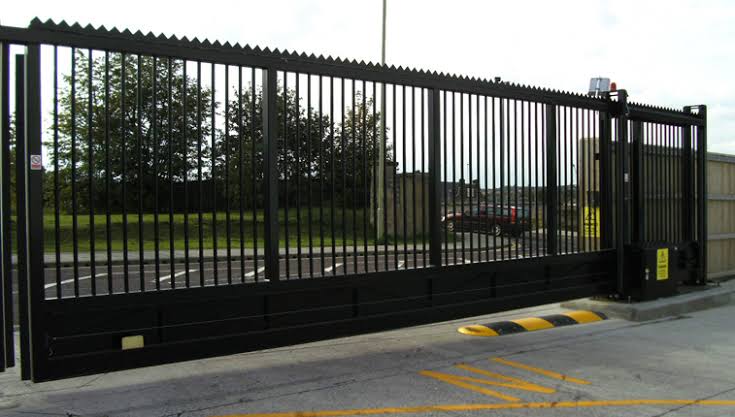
Every other gate on your property exists to stop something. A boom barrier exists to keep things moving. It is the pivoting arm you see at parking garages, pay lots, and controlled employee lanes — a lightweight boom that lifts out of the way in roughly one to six seconds, lets a single vehicle pass, and drops again before the next car creeps forward. Mustang Fencing & Gates has installed traffic-arm and boom-barrier systems across Greater Houston — from Sugar Land parking decks to Katy employee lots — and this page is here to help you decide whether a boom barrier is the right tool for your lane, then spec it so it earns its keep.
One thing to be clear about up front: a boom barrier controls traffic, not intruders. The arm is meant to be seen, obeyed, and — in a genuine emergency — pushed through on a break-away coupling without wrecking your equipment. That is a feature, not a flaw. Where you also need a real security barrier, we pair the boom with a swing, slide, or cantilever gate for after-hours lockdown. Read on and we will show you exactly where each belongs.
Where a Boom Barrier Earns Its Keep
Boom barriers shine anywhere the job is metering a steady stream of vehicles — one car, one lift, all day — rather than sealing a perimeter. If any of these describe your entry, a traffic arm belongs on your shortlist.
Parking Decks & Garages
Multi-level decks with low ceilings and constant in-and-out flow. A folding (articulated) arm clears tight clearances the straight boom can’t, keeping the ramp moving at rush hour.
Employee & Visitor Lanes
Badge or RFID in for staff, ticket or intercom for guests. The arm keeps honest traffic honest and gives your front desk a clean, countable record of every entry.
Pay & Gated Lots
Ticket dispensers, validation, and license-plate reads at high in-and-out counts. Fast cycle times mean fewer cars stacked into the street waiting to pay and pull out.
Campus, HOA & Mixed-Use
Resident and amenity lanes where you want controlled, courteous access without a heavy security gate cycling all day. Pair it with a lockable gate for overnight closure.
Lanes We Keep Moving Across Houston
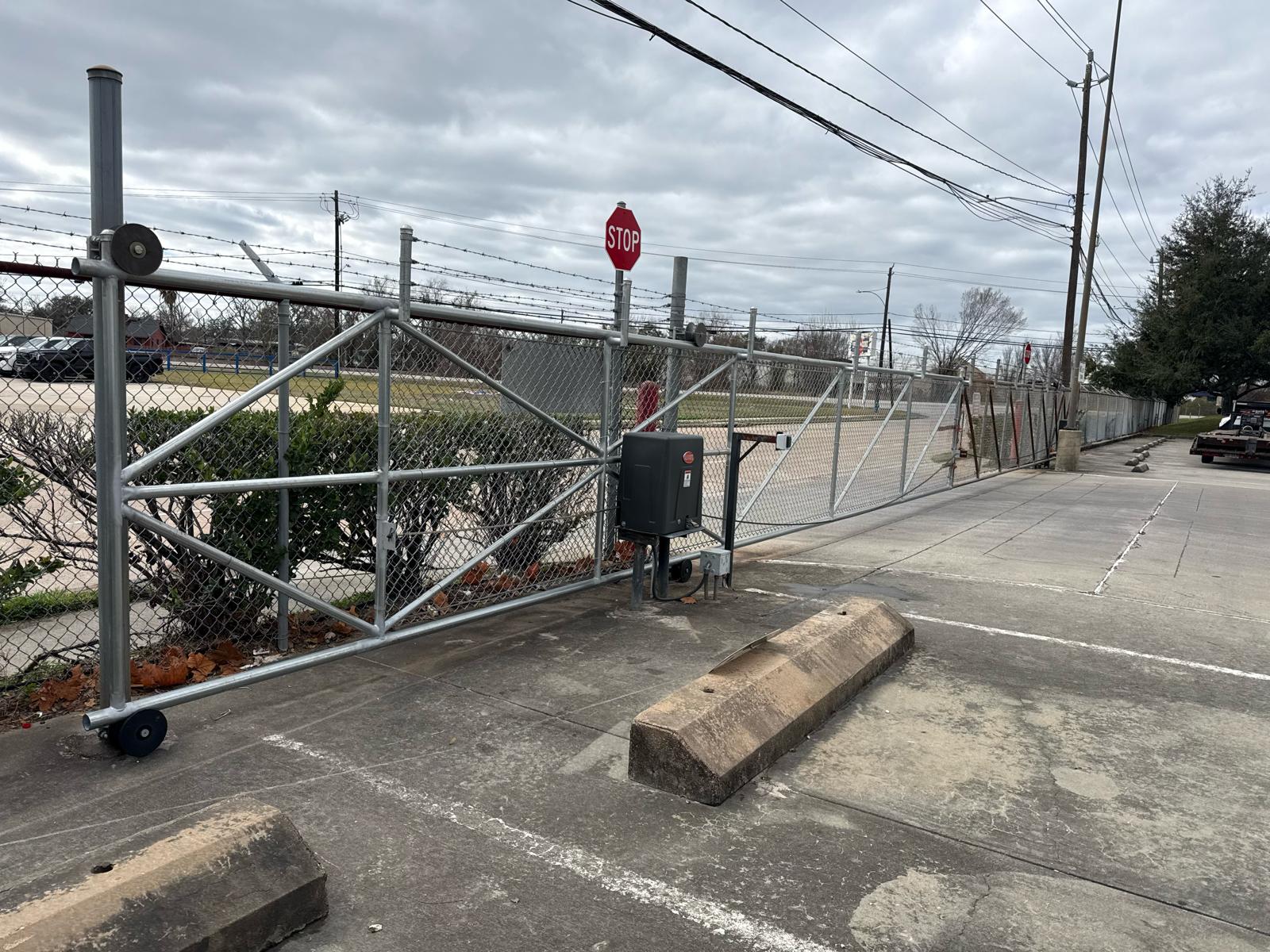
We fabricate in Stafford and set boom barriers and traffic arms on parking decks, employee lanes, and gated lots all over Greater Houston. Our install crews regularly work lanes in:
Houston · Sugar Land · Stafford · Missouri City · Bellaire · Pearland · Friendswood · Pasadena · Katy · Fulshear · Richmond · Cypress · Spring · The Woodlands · Humble
If your entry sits anywhere in the greater Houston area, we can walk the lane with you — usually within days, not weeks.
Boom Barrier or Security Gate? Know the Difference
The single most expensive mistake with a boom barrier is buying it to do a security gate’s job. They are built for opposite goals. This side-by-side shows where each one wins — and why many Houston sites run both, an arm for daytime throughput and a gate for after-hours lockdown.
| Boom Barrier (Traffic Arm) | Security Gate (Swing / Slide / Cantilever) | |
|---|---|---|
| Primary job | Meter and count vehicles quickly | Physically stop and secure the opening |
| Speed per cycle | Very fast — roughly 1–6 seconds | Slower — a full leaf has to travel the opening |
| Daily throughput | Highest — built for constant in-and-out | Moderate — better for controlled, lower-volume entries |
| Stops a determined vehicle? | No — a light arm is a visual and legal barrier | Yes — a hardened leaf resists forced entry |
| After-hours lockdown | Not on its own — the lane stays drivable | Yes — latches and locks the perimeter |
| Best pairing | An RFID / ticket / LPR lane you want moving | A boom barrier, for the best of both |
Relative install cost, not a quote: a basic short-arm barrier carries the lowest cost ($), a standard automated boom with detection loops and a keypad or reader sits in the middle ($$), and a high-cycle intensive-duty boom with a fence skirt and license-plate or ticketing integration runs highest ($$$). Every lane is priced on your real opening, clearance, cycle count, and controls — these tiers are an estimate to help you scope, never a quote.
Not sure whether your entry wants an arm, a gate, or both? We’ll walk the lane with you and put the recommendation in writing.
Pick the Right Arm for Your Lane
“Boom barrier” is one product with several arm profiles, and the right one is set by your lane width and — above all — your overhead clearance. Choosing the arm before the site walk is guessing; here is how we match it to the opening.
Straight Boom
The default. A single rigid arm for open lanes up to roughly 20 ft with clear overhead room. Simple, fast, and the easiest to service — the right call whenever nothing above the lane is in the way.
Folding / Articulated Boom
The arm bends at a hinge as it lifts, so it rises within a low ceiling instead of hitting it. The go-to for parking decks, garages, and any lane with a beam or soffit overhead.
Fence / Skirted Boom
A hanging skirt or drop-fence closes the gap under the arm, discouraging pedestrians and cyclists from simply ducking through. Useful where the lane doubles as a walk-under temptation.
High-Cycle Intensive Boom
A duty-rated motor and heavier internals for lanes cycling thousands of times a day. When uptime is the whole point — busy garages, transit lots — this is the spec that keeps lifting.
How Much Traffic Can It Move? Throughput at a Glance
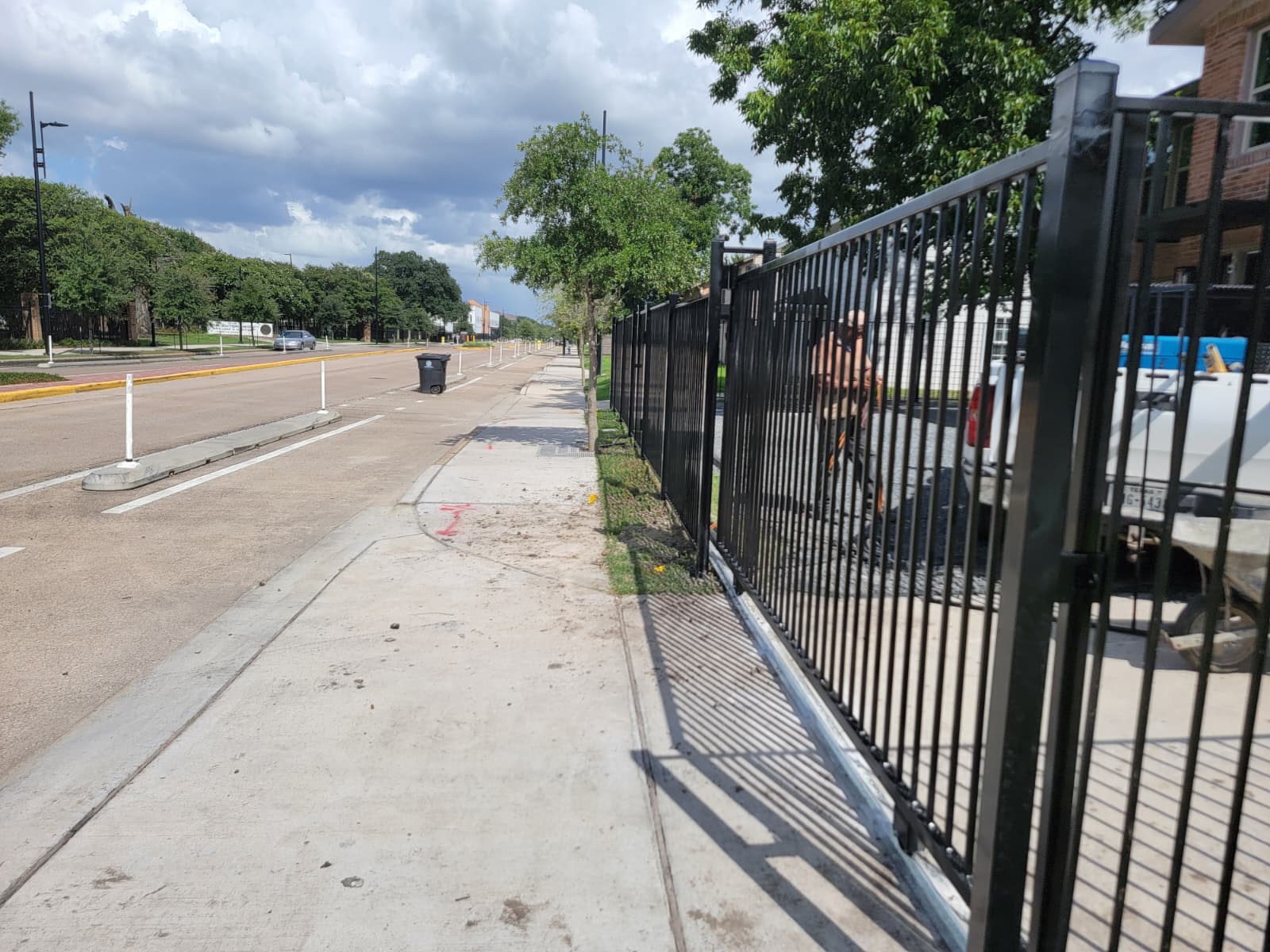
Throughput is the whole reason a boom barrier exists, and it out-paces every leaf-style gate because the arm only has to swing up, not travel the full opening. The bars below compare typical in-and-out capacity — a planning aid to help you scope the lane, confirmed against your real traffic on site, not a fixed spec.
Ask the Houston Managers Whose Lanes We Built
Before you trust anyone with the lane your tenants and staff sit in every morning, see what other Houston property and facility managers say about working with us. Mustang Fencing & Gates has earned 650+ reviews on Google, 250+ on Thumbtack, 150+ on Angi, and 100+ on Facebook — real lanes, real arms, real neighbors.
Fast Doesn’t Mean Unsafe: How the Arm Protects
An arm that drops thousands of times a day sits inches from moving vehicles and people, so safety is engineered in, not bolted on. Every Mustang boom install carries the detection and fail-safes that keep the lane quick and forgiving.
- Vehicle detection loops. In-ground loops sense a car under the arm so it never drops on a bumper, and free-exit loops raise it automatically as vehicles leave.
- Photo-eyes & auto-reverse. Infrared beams and obstruction sensing stop and reverse the arm the instant anything interrupts the lane.
- Break-away / frangible arm. If a vehicle does strike it, the arm releases at a coupling instead of shattering the gearbox — a quick, low-cost reset rather than a service call.
- High-visibility arm & LEDs. Reflective striping and optional arm-mounted LEDs make the boom impossible to miss at night or in Houston’s driving rain.
- Manual release & battery backup. A key release and battery option keep the lane operable through a power loss — important for fire-lane and emergency egress.
From Site Walk to First Lift
Every boom-barrier install runs the same clear path — no surprises between the handshake and the handoff.
- Walk the lane together. We measure lane width and overhead clearance, read your traffic pattern and peak counts, and confirm whether one arm or paired in-and-out lanes fit — then tell you which arm profile is in play.
- Spec it in writing. A line-itemed proposal naming the barrier, arm style, detection loops, controls, and any access integration, so procurement can compare apples to apples.
- Set the base & run conduit. We pour or anchor a proper foundation pad, saw-cut and lay the loops, and run power and control conduit — sized for the readers and cameras you may add later.
- Mount, level & program. The barrier is set plumb, the arm balanced, and open/close timing, loops, and entry devices programmed to your lane.
- Test every cycle & train your team. We run the arm through detection, safety reverse, and manual release with you watching, then hand over a lane that lifts clean — and show your staff how to work it.
The Brains Behind the Arm: Access & Integration
The barrier is the muscle; what tells it when to lift is the brains. A boom is only as smart as the controls feeding it, and we rough in for all of them during the install so nothing gets torn out to add a reader later.
How the lane triggers. Keypads and push-buttons, RFID and proximity readers, fobs and transponders, ticket dispensers with validation, telephone entry and intercoms, and license-plate recognition for hands-free, no-credential entry. We coordinate these on our commercial access control service so the wiring is staged while the barrier goes in.
How it ties into the property. A boom barrier rarely stands alone. It usually meters the daytime lane while a swing, slide, or cantilever gate handles after-hours lockdown, and both plug into the wider commercial fencing line that secures your perimeter. Powering and automating those gates is its own scope on our commercial automatic gates service, and if you’re still budgeting, our Houston commercial fence & gate cost guide lays out what drives the number.
Rolling out badges, LPR, or paid parking on the lane? Tell us the whole plan — we’ll spec the barrier and rough-in so it all drops in clean.
Recent Commercial Work Across Greater Houston
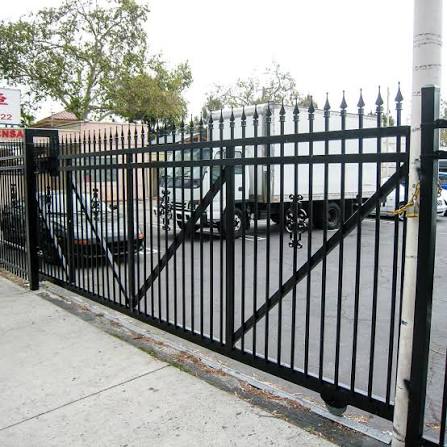
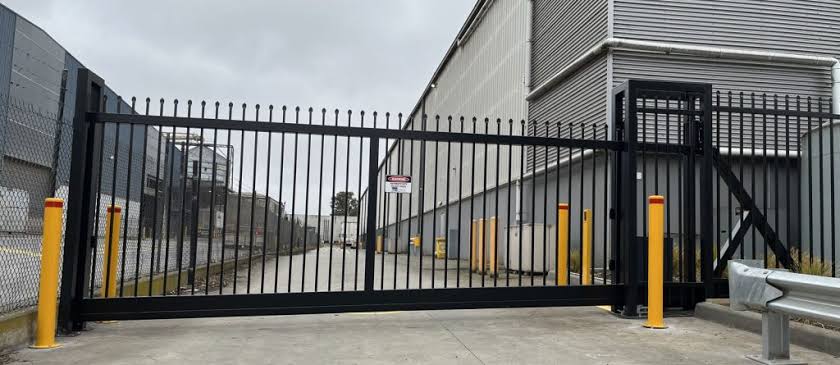
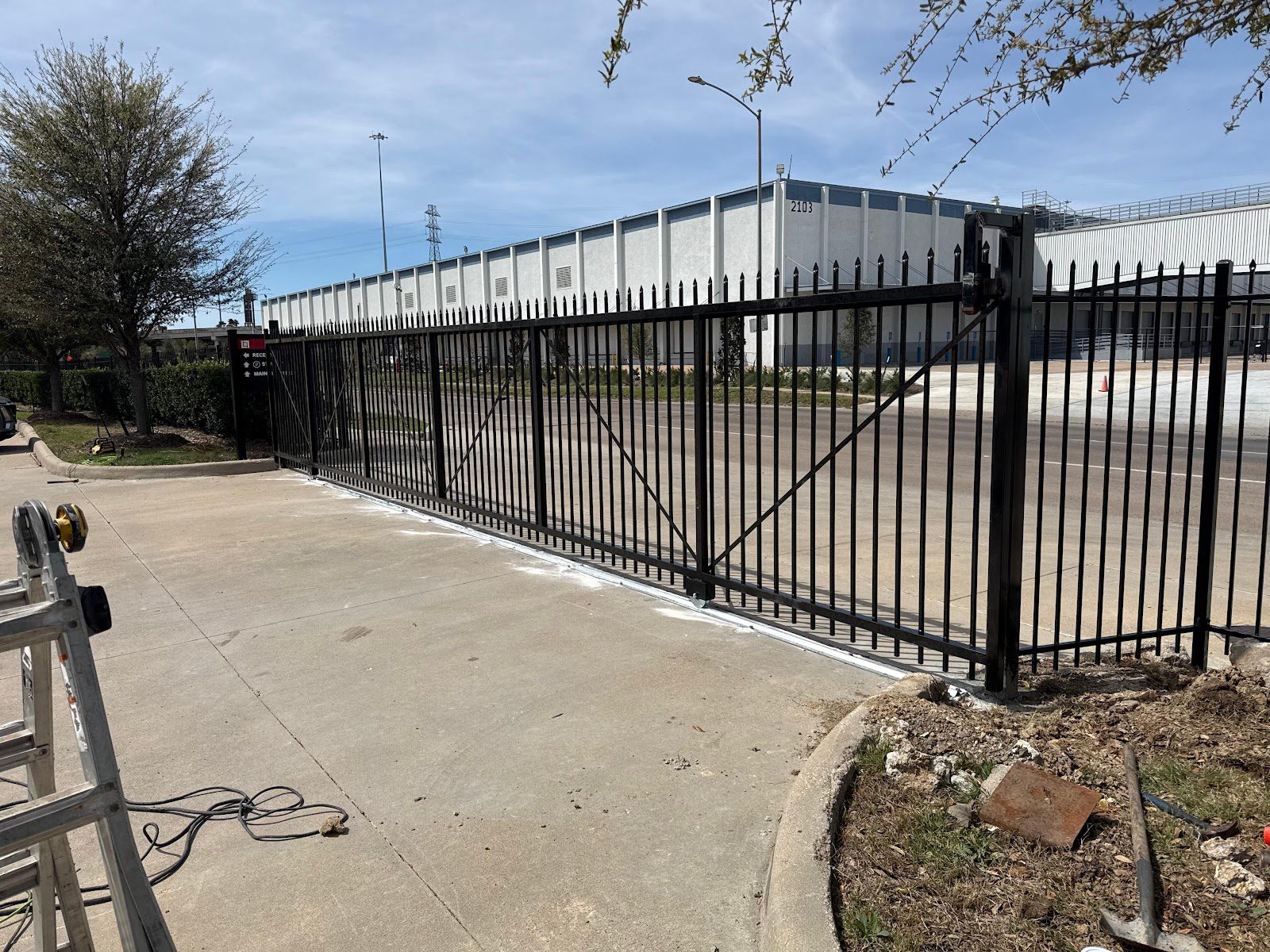
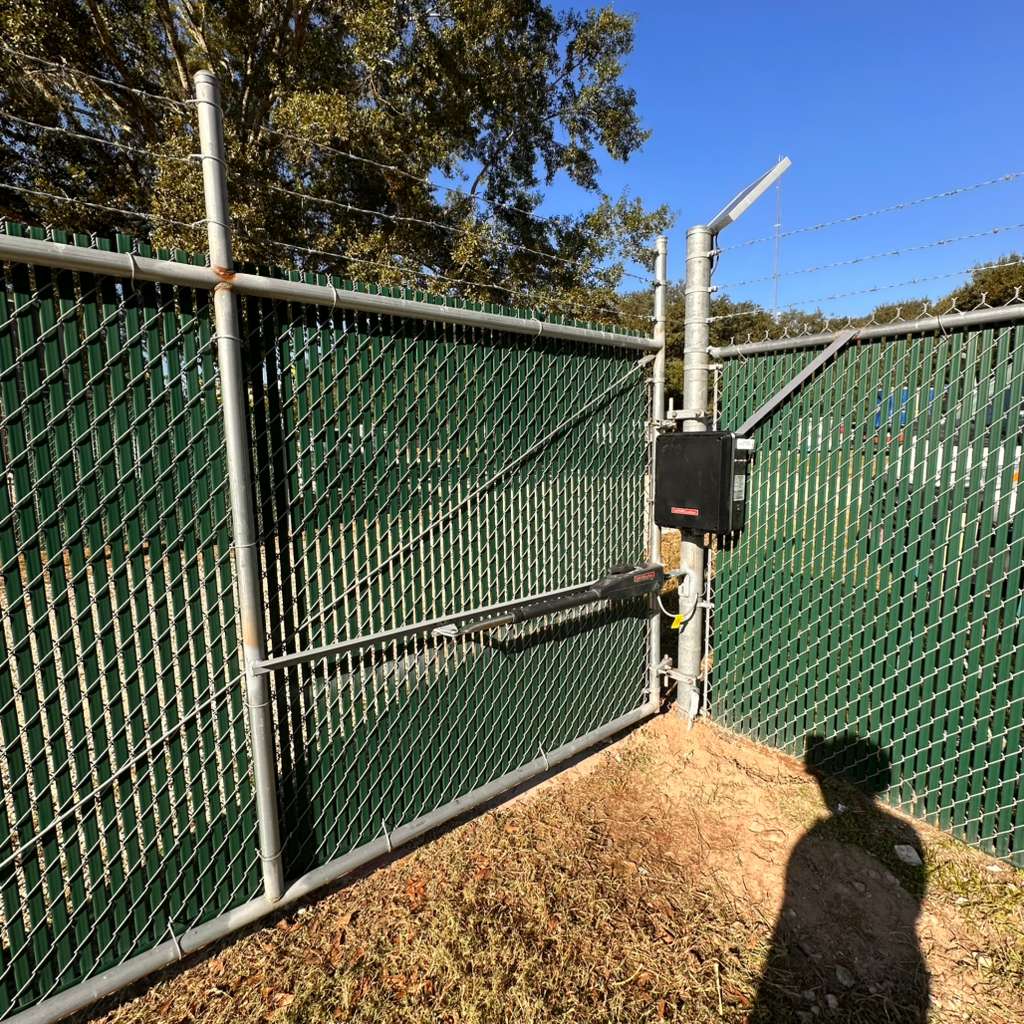
Real Mustang Fencing & Gates commercial installations around the Houston area — designed, fabricated, and installed by our own crews.
Watch: Boom Barrier & Traffic-Arm Installs Around Houston
What’s the difference between a boom barrier and a security gate?
A boom barrier is a fast, lightweight arm built to meter traffic — it lifts in a second or two, lets one vehicle through, and drops again, all day long. It is a visual and legal barrier, not a physical one, so it will not stop a determined vehicle. A security gate — swing, slide, or cantilever — is a hardened leaf built to physically secure the opening, but it cycles slower. Many Houston sites run both: the arm for daytime throughput and a gate for after-hours lockdown.
How fast does a boom barrier open, and how many cars can it handle?
Typical barriers open in roughly one to six seconds depending on arm length and the model’s duty rating, which is why they move far more vehicles per hour than any leaf gate. For very busy lanes we spec a high-cycle, intensive-duty unit rated for thousands of lifts a day. The right speed and duty are set by your actual peak traffic, which we confirm on the site walk.
Will a boom barrier stop a car from forcing through?
No, and it isn’t meant to. The arm is designed to break away at a coupling if struck, so a mistake or emergency doesn’t destroy the mechanism — you just reset the arm. If you need to physically stop vehicles, you want a security gate or, for hostile-vehicle protection, a rated crash barrier. We’ll tell you honestly which one your risk calls for.
Can a boom barrier work in a low-clearance parking garage?
Yes — that is exactly what the folding, or articulated, arm is for. Instead of swinging up straight into the ceiling, the arm bends at a hinge and rises within the low clearance. We measure your overhead room on the walk and match the arm profile so it clears every beam and soffit above the lane.
How does the arm know when to open — loops, badges, or license plates?
Any of them, and usually a combination. In-ground detection loops sense vehicles for safety and free exit, while entry is triggered by keypads, RFID or proximity readers, fobs, ticket dispensers, intercoms, or license-plate recognition for hands-free access. We rough in the conduit for all of it during installation so you can add or change readers later without tearing up the lane.
Do you install just the arm, or the access controls too?
Both, coordinated as one job. We set the barrier, foundation, loops, and safety devices, and we stage and integrate the access controls — readers, ticketing, LPR, intercoms — through our commercial access control scope so the lane works as a single system on day one.
Let’s Get Your Lane Moving
Tell us your lane width, your overhead clearance, and how the traffic runs, and Mustang Fencing & Gates will walk your site, recommend the right arm and controls in writing, and hand you a clear estimate. No pressure, no obligation.
Request Your Free Boom Barrier Estimate
Mustang Fencing & Gates · 13004 Murphy Rd #222, Stafford, TX 77477 · (346) 639-4333
Call (346) 639-4333