
Houston Commercial Gates
Swing, roller-slide, cantilever, or barrier arm? The right commercial gate isn’t the one in a catalog — it’s the one your entry width, your daily traffic, and Houston’s clay ground can actually live with. Here’s how to choose it, and how we fabricate and hang it to run true.
A gate is the one part of your perimeter that actually has to move — swing or roll open thousands of times a year and still line up and latch clean on the thousandth cycle. That is exactly why choosing the wrong configuration is the costliest mistake on a commercial entry: the fabric can be perfect, but a slide gate fighting a silted track or a swing leaf sagging on an undersized post will fail long before the fence beside it. Mustang Fencing & Gates has fabricated, hung, and set commercial gates across Greater Houston — from Sugar Land office parks to Katy distribution yards — and this page is built to help you pick the right one before anyone quotes a number.
Think of it as a selection guide first and an install estimate second. We match gate type to your opening width, backdrop room, grade, traffic, and security level, then build the passive structure to commercial standards. The motor and the entry devices are deliberately kept as separate, clearly flagged next steps — the gate has to be engineered right before any operator or keypad is bolted to it.
Start Here: The Four Commercial Gate Types
Every commercial entry comes down to one decision — how the leaf gets out of the traffic path. Shortlist from the four workhorse configurations below (plus the pedestrian gate almost every site pairs with them) before we ever walk your entry.
| Gate Type | How It Moves | Best For | Watch-Out |
|---|---|---|---|
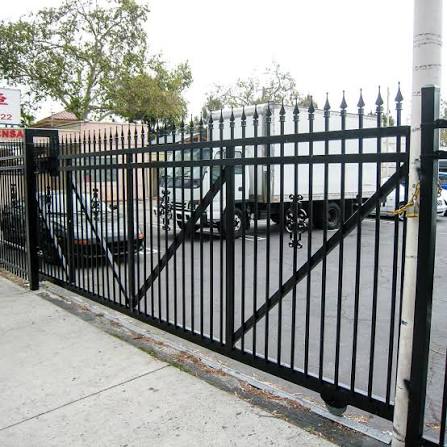
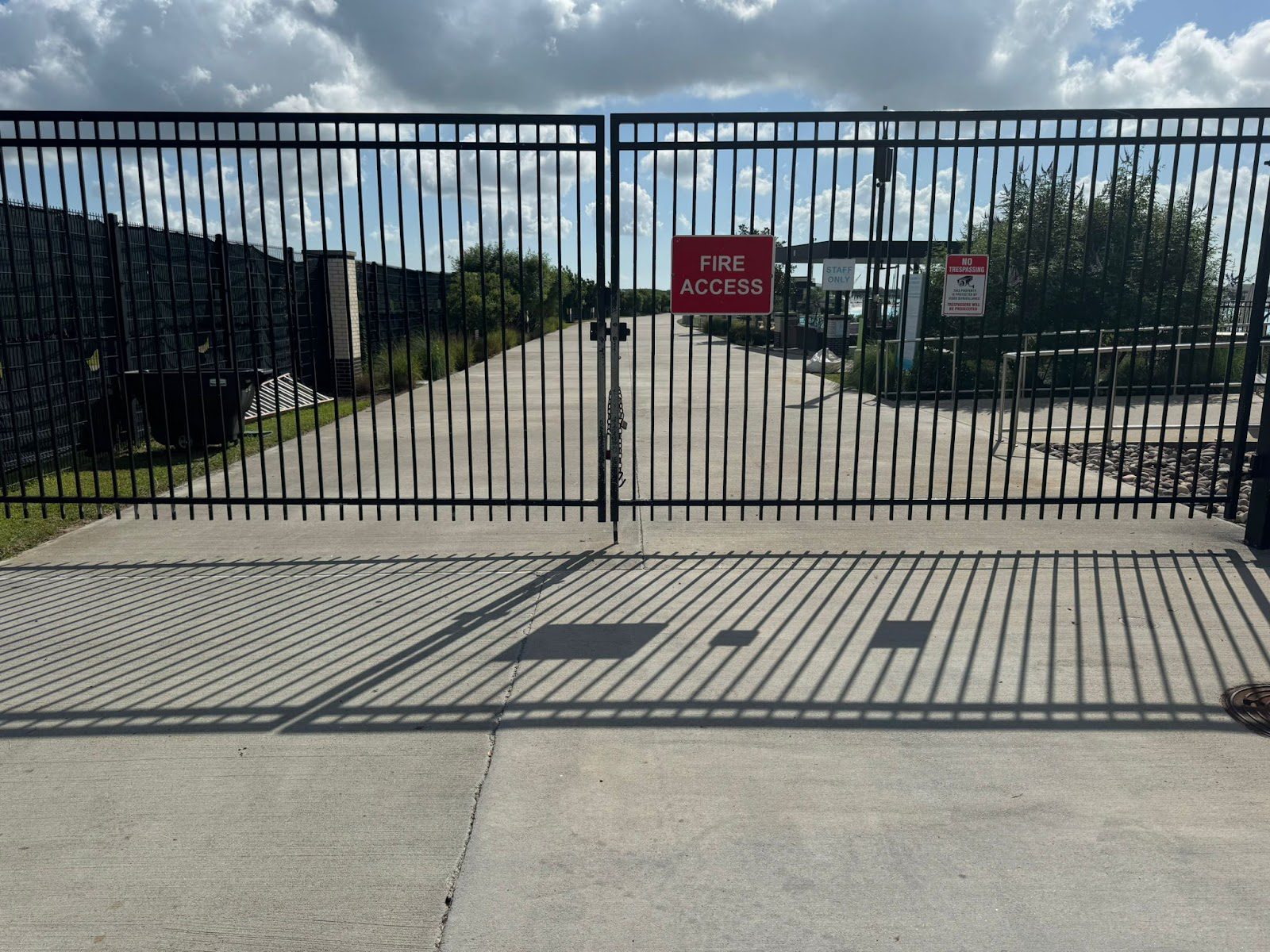
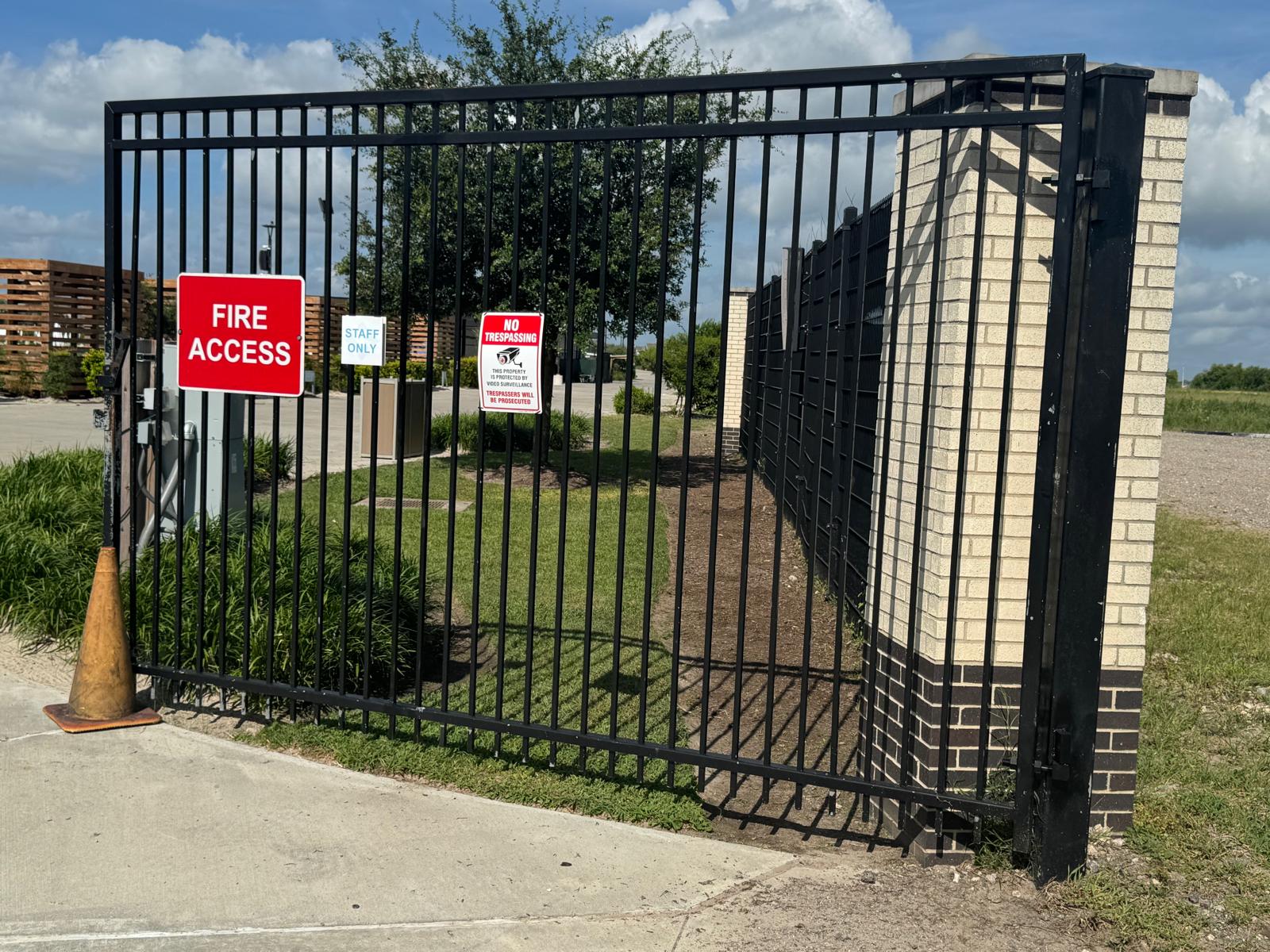
| Swing (single / bi-parting) | Leaf pivots open on hinge posts | Level entries up to ~24 ft, office parks, campuses, and communities where curb appeal matters | Needs a clear swing arc and level grade; sags if the posts are undersized |
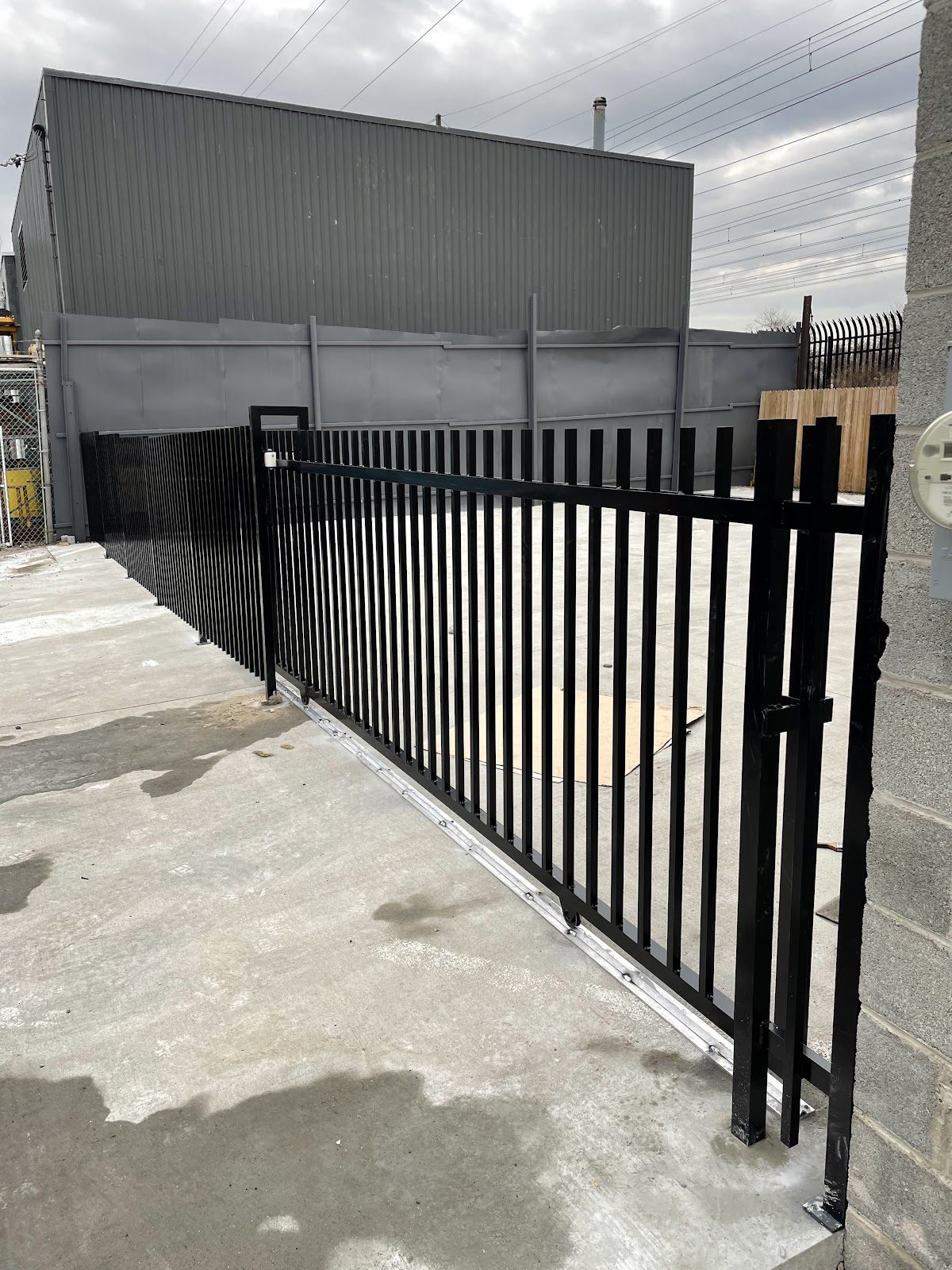
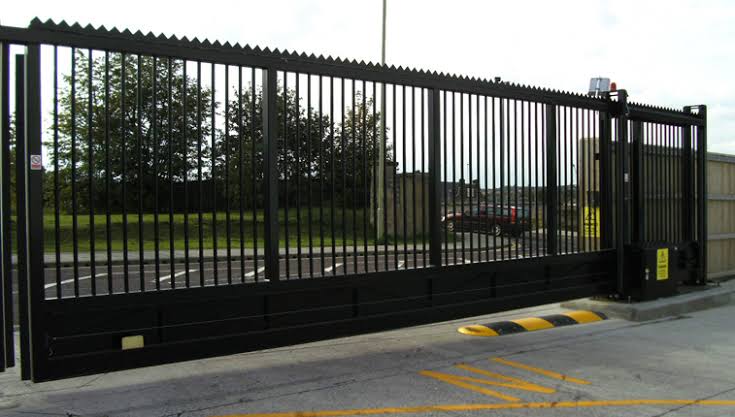
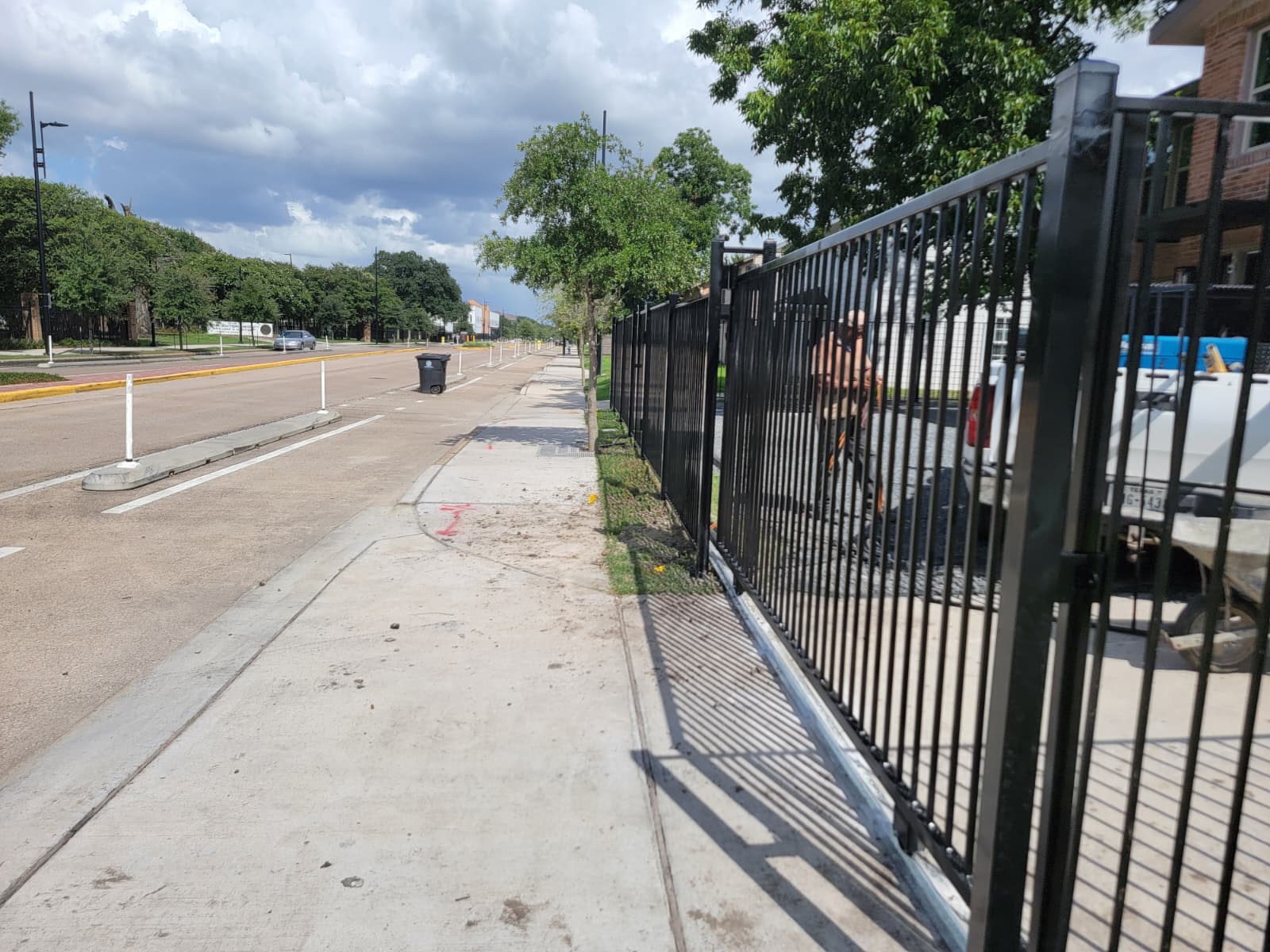
| Roller-Slide | Rolls sideways on a bottom ground track | Wide openings on firm, level, drainable ground — warehouse and laydown yards | Track has to stay clear of silt, mud, and standing water |
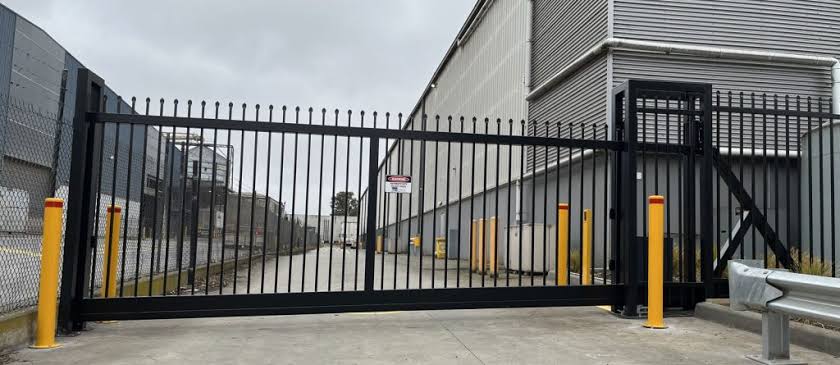
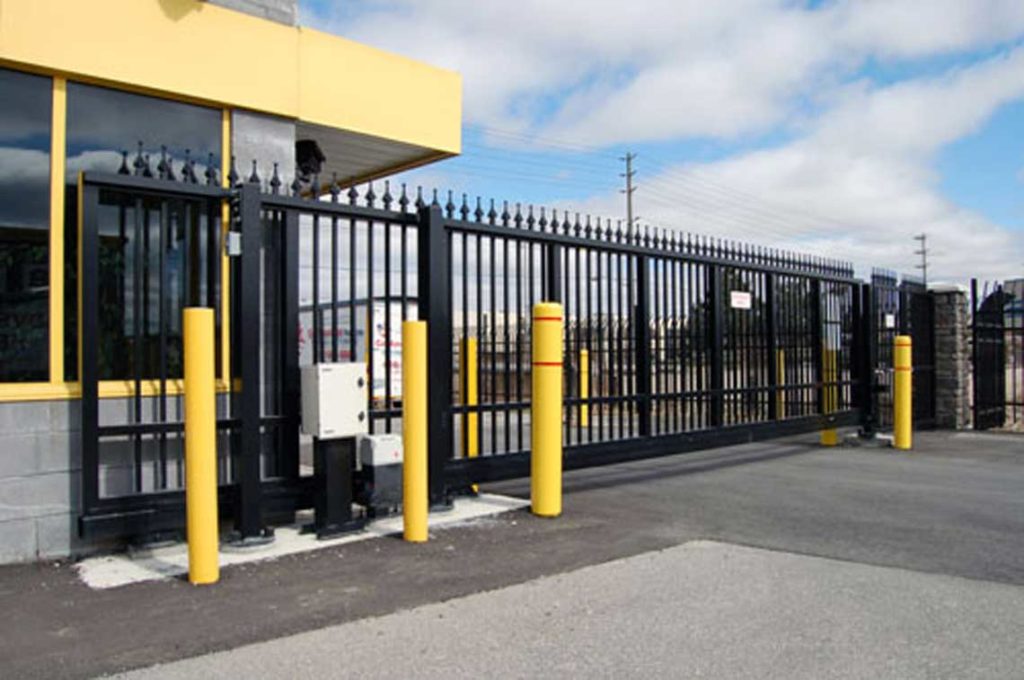
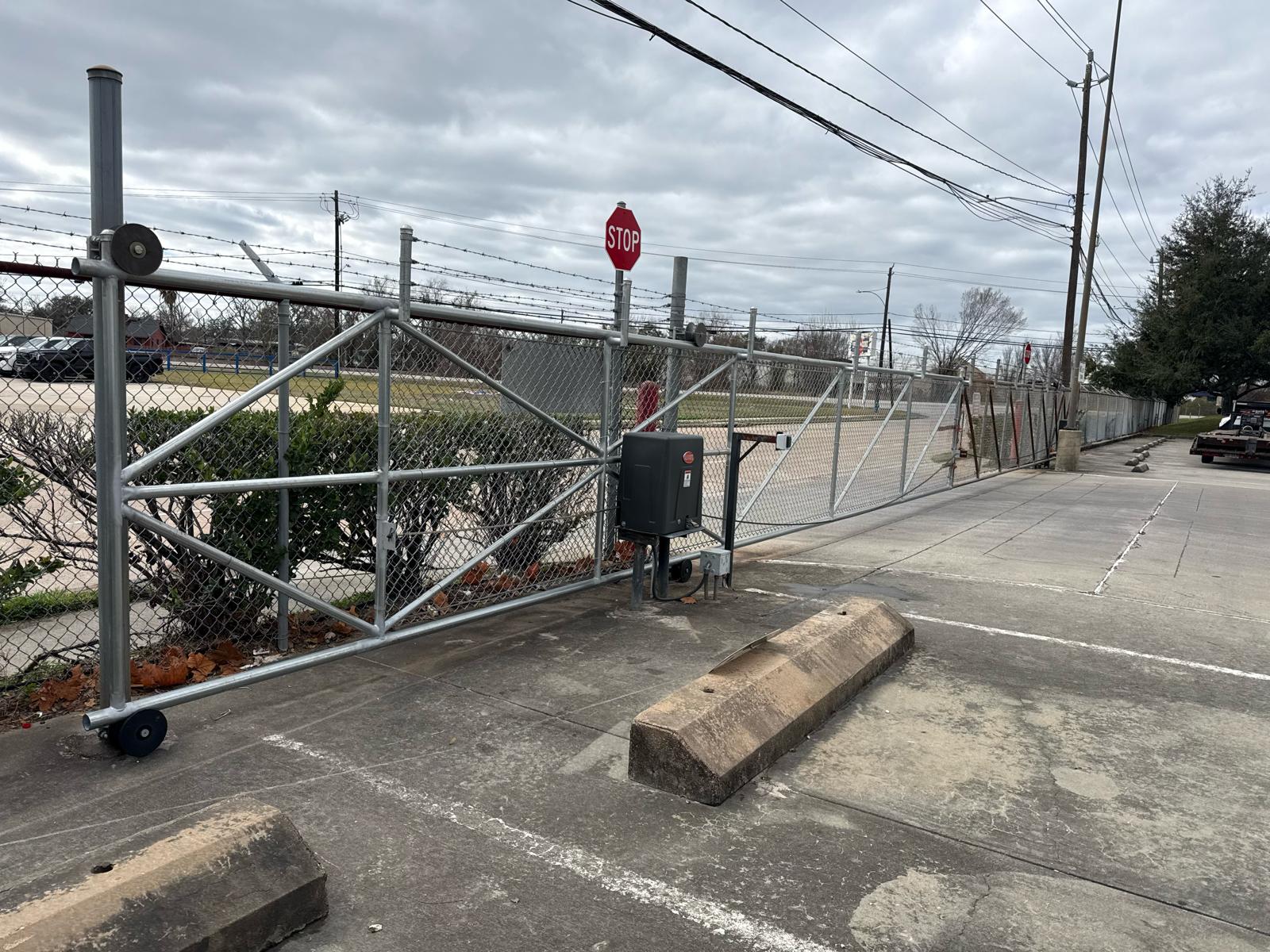
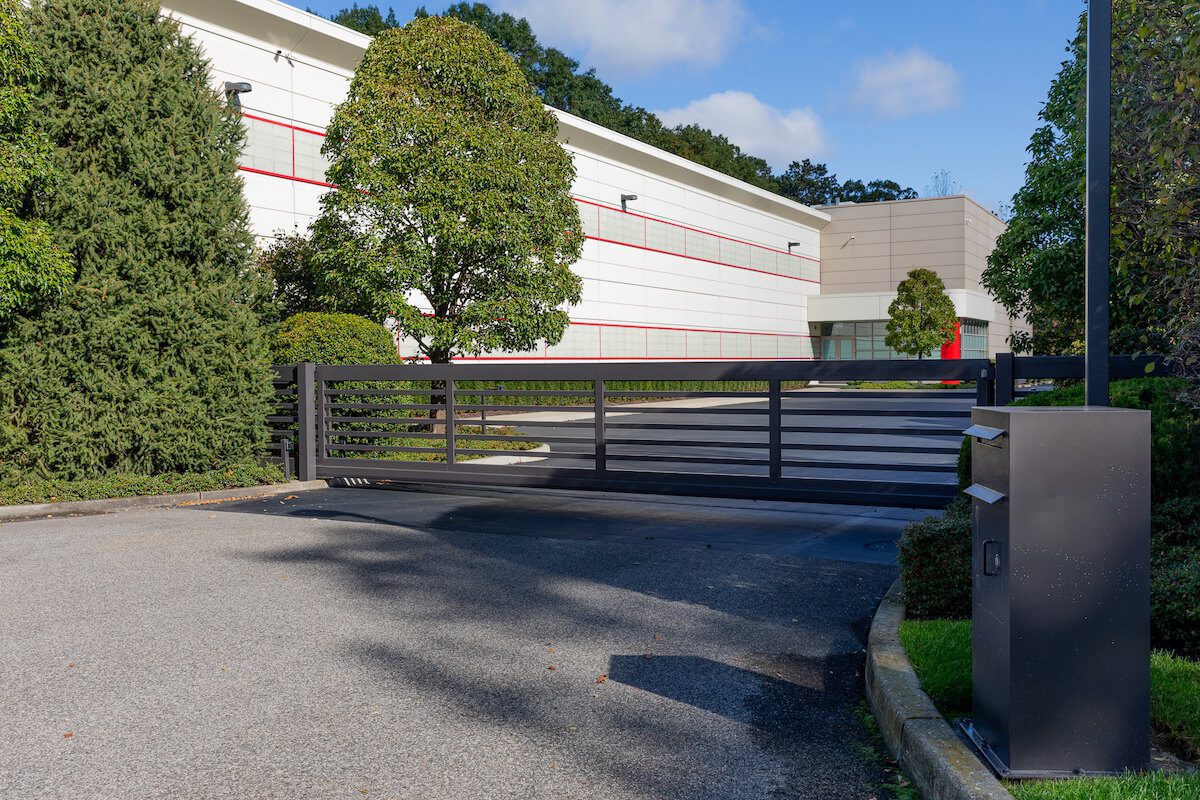
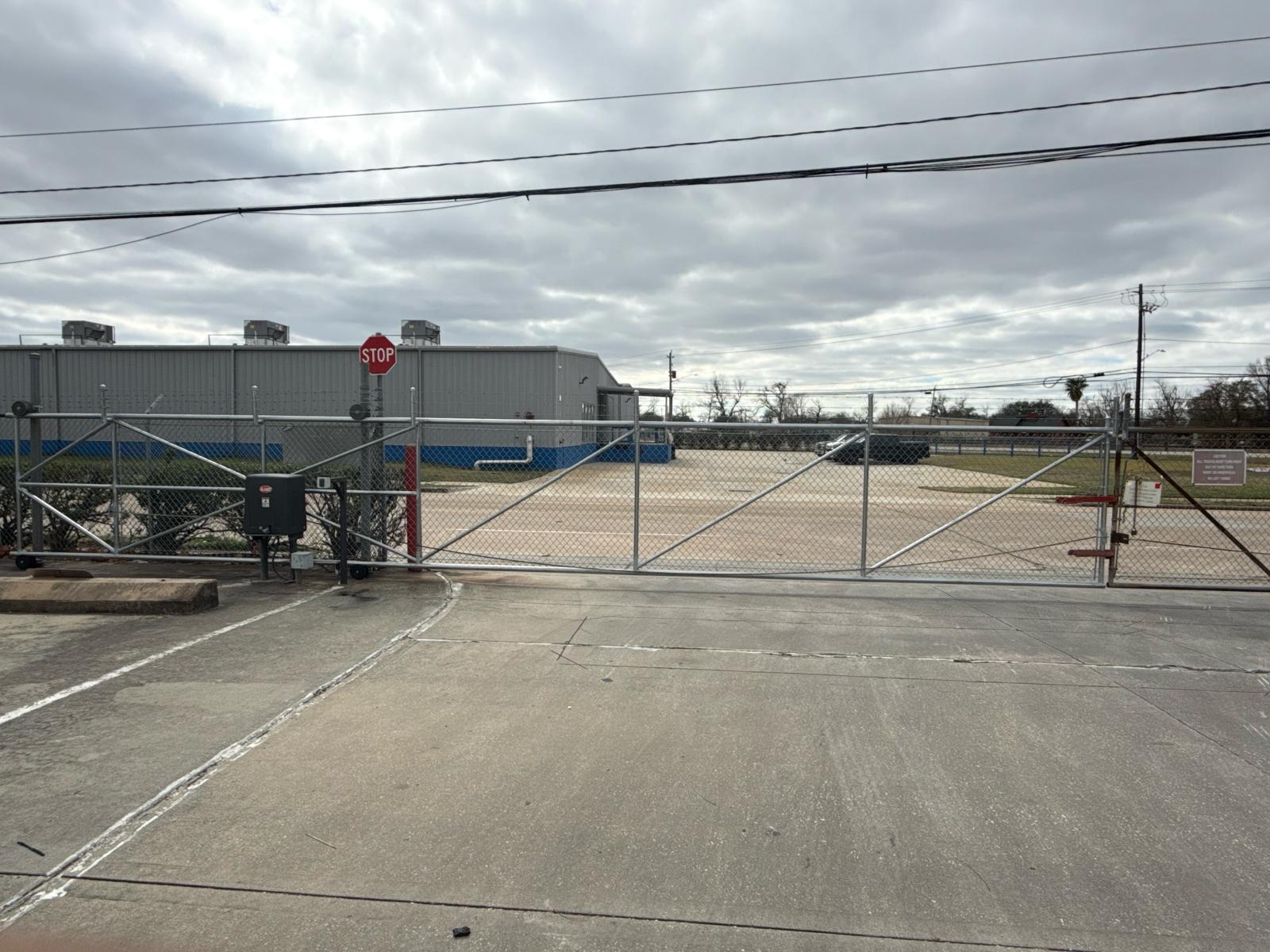
| Cantilever Slide | Floats across the drive on a counterbalance — no ground track | Poor grade, debris, or high daily cycles; logistics and industrial entries | Needs backdrop room roughly 1.5× the opening width |
| Barrier Arm | A pivoting arm lifts to clear the lane | High-throughput parking, visitor, and employee lanes managing flow | Controls traffic, not intruders — pair with a security gate after hours |
| Pedestrian / Man Gate | Small hinged leaf for foot traffic | An ADA-friendly walk-through beside almost any vehicle gate | Panic hardware and self-close specified to the site’s code and use |
Relative install cost, not a quote: swing gates carry the lowest hardware cost ($), roller-slide and pedestrian gates sit in the middle ($$), and cantilever and barrier-arm systems run highest ($$$) for their counterbalance framing and duty-rated components. Every gate is priced on your real opening, height, and fabric — these tiers are an estimate to help you scope, never a quote.
Which One Fits Your Entry?
Before we recommend a configuration, we read the physical realities of your opening. These six conditions are what actually make or break each gate type on a Houston site.
- Opening width & backdrop room. Slide gates need clear space to one side; a cantilever needs the most — about 1.5× the opening for its counterbalance tail. Tight sites push toward swing or bi-parting leaves.
- Grade & drainage. Swing gates struggle on slopes; roller-slide tracks silt up in Houston’s clay and standing water. Poor drainage usually points straight to a cantilever with no ground contact.
- Traffic volume & cycle count. Twenty cycles a day and two thousand are different machines. High-cycle entries favor cantilever and barrier-arm systems built to a real duty rating.
- Vehicle mix & clearance. 53-ft trailers, box trucks, and fire apparatus need wider openings and turning room than passenger cars — we confirm the swept path before setting a post.
- Security level & infill. The gate fabric should match your perimeter — ornamental steel, welded mesh, palisade, or chain link with outriggers — so the gate and fence read as one hardened line.
- Future automation. Even if you install manual today, we frame and position the gate so an operator and safety loops drop in later — no rebuild, no reset posts.
Not sure whether your entry wants a swing, a slide, or a cantilever? We’ll walk it with you and put the recommendation in writing.
Built to Hang True: Fabrication, Posts & Hardware
Picking the type is only half the job. A commercial gate lives or dies on how it is fabricated, how deep its posts are set, and whether the hardware is rated for the load it carries every single day. Here is what goes into a Mustang gate that still latches clean years later.
Posts Set to the Load
Hinge and roller posts are the whole game. We size and set them deep in concrete for the gate’s weight, wind load, and Houston’s expansive clay — so a heavy leaf never sags or heaves out of alignment.
Welded Steel Frame
Leaves are fabricated from structural steel or heavy aluminum, welded rather than bolted to the gate’s duty, then hot-dip galvanized and powder-coated to survive salt-tinged Gulf air.
Hung Plumb & Tested
The gate is hung true, swept through its full travel, and cycle-tested by hand before we leave — latch, keeper, and stop lined up so it moves the same on cycle one and cycle ten thousand.
Duty-Rated Hardware
Hinges, ball-bearing rollers, keepers, and latches are matched to the leaf and the cycle count — the quiet parts that decide whether a gate lasts five years or twenty-five.
From First Walk to Final Latch
Every Mustang gate build runs the same five beats — no surprises between the handshake and the handoff.
- Walk the entry together. We measure the opening, read grade, drainage, and backdrop room, and check the swept path of your biggest vehicle — then tell you on the spot which configurations are in play.
- Get it in writing. A written bid that names the gate type, fabric, post schedule, and hardware, line-itemed so procurement can compare apples to apples.
- Fabrication in our Stafford shop. Your leaf is welded, galvanized, and finished before install day, so the crew arrives with a gate — not a kit of parts.
- Install day. Posts set in concrete to the load, leaf hung plumb, hardware dialed in — phased so an active entry stays usable while we work.
- Cycle it with you. We sweep the gate through its full travel with you watching, confirm latch and stop alignment, and hand over the entry only when it runs true.
How Much Traffic Can It Take? Duty & Throughput
Different gates are built for different daily workloads. The bars below show how the configurations generally compare on cycle duty and throughput — a planning aid confirmed against your real traffic on site, not a fixed spec.
Automation & Access: Your Clean Next Steps
This page covers the passive gate — the structure that has to be right before anything powers it. Two related scopes finish the entry, and we stage conduit and rough-in during the gate build so they drop in later without tearing anything out.
The motor. Once the structure is set, the operator follows — sized to your gate’s weight and duty cycle, with safety loops and photo-eyes. We plan it alongside the gate on our commercial automatic gates service rather than deep-diving operator brands here.
The entry devices. Keypads, card and fob readers, telephone entry, and intercoms decide who gets through. We coordinate those on our commercial access control service so the wiring is roughed in while the gate is being built. Both tie back to the wider commercial fencing program that secures the rest of your perimeter.
Planning a manual gate now and automation later? Tell us the whole picture — we’ll build the structure so nothing gets rebuilt.
Where These Gates Go to Work
We specify, fabricate, and hang commercial gates for the full range of Houston-area facilities — from Sugar Land and Stafford to Katy, Pearland, Missouri City, Cypress, and The Woodlands.
Industrial & Distribution
Warehouses, distribution centers, and laydown yards running trailer traffic — high-cycle cantilever and slide gates sized for the swept path.
Multifamily & HOA Communities
Apartments, HOAs, and gated communities needing controlled resident and visitor lanes with curb appeal — often dual-swing with future access control.
Retail, Office & Institutional
Shopping centers, office parks, and healthcare campuses balancing controlled access, appearance, and reliable daily throughput.
Schools, Churches & Municipal
Campus, worship, and government entries with controlled pedestrian and vehicle gates for safe, reliable daily access.
Self-Storage & Logistics
Self-storage sites, laydown yards, and logistics operators where uptime and cycle durability drive the entire gate spec.
Contractors & Developers
General contractors and developers phasing ground-up and tenant-improvement projects who need the gate scoped to spec and delivered on schedule.
Gate Crews Within Reach of Your Entry
We fabricate in Stafford and hang commercial gates across Greater Houston. Our install crews regularly set gates in:
Houston · Stafford · Sugar Land · Missouri City · Katy · Cypress · Pearland · Pasadena · Bellaire · Jersey Village · Richmond · Rosenberg · Humble · Tomball
If your facility sits anywhere in the greater Houston area, we can walk it — usually within days, not weeks.
Recent Commercial Work Across Greater Houston
Real Mustang Fencing & Gates commercial installations around the Houston area — designed, fabricated, and installed by our own crews.
Ask Houston Before You Ask Us
Before you hand anyone your entry, read what other Houston property and facility managers say about working with us. Mustang Fencing & Gates has earned 650+ reviews on Google, 250+ on Thumbtack, 150+ on Angi, and 100+ on Facebook — real entries, real gates, real neighbors.
Watch: Commercial Gate Installs Around Houston
How do I choose between a swing, slide, cantilever, and barrier-arm gate?
It comes down to four things about your entry: how much side (backdrop) room you have, your grade and drainage, your daily cycle count, and your security level. Swing suits level sites with a clear arc; roller-slide suits wide openings on firm, drainable ground; cantilever suits poor grade, debris, or high traffic because it has no ground track; and a barrier arm suits high-throughput lanes where you are managing flow, not stopping intrusion. We give you a written recommendation after a quick site walk.
How much room does a cantilever gate need behind the opening?
Plan on roughly 1.5 times the opening width of clear backdrop space to one side for the counterbalance tail — a 20-ft opening wants about 30 ft of run. If you do not have that side room, a swing or bi-parting configuration is usually the better fit.
Do you install the operator and access control too, or just the gate?
On this scope we build the passive gate structure. Operators and access devices — keypads, readers, telephone entry, intercoms — are handled as clearly flagged next steps through our commercial automatic gates and commercial access control services. We stage conduit and rough-in during the gate build so those layers add on later without any tear-out.
Can you install a manual gate now and automate it later?
Absolutely, and it is a common phased approach. We frame, position, and reinforce the gate so an operator and safety loops can be added later without rebuilding the structure or resetting posts — protecting your budget across phases.
What materials and standards do you build commercial gates to?
Commercial gates use structural steel or heavy aluminum frames, welded to the leaf’s weight and wind load, then galvanized and powder-coated for Gulf humidity. Chain-link components follow the usual ASTM framework standards, posts are set for the gate’s duty, and swept vehicle paths are confirmed before installation.
How do you keep an active commercial entry open during the install?
We schedule around your operations, stage fabrication ahead of the install so the gate is ready when we arrive, and phase the work to keep an entry usable during the changeover. Timelines are built into the proposal so procurement and site teams know exactly what to expect.
Let’s Pick the Right Gate for Your Entry
Tell us your opening and how it gets used, and Mustang Fencing & Gates — one of Houston’s most-reviewed fence and gate companies, with 650+ Google reviews — will walk your site, put the configuration in writing, and hand you a clear estimate. No pressure, no obligation.
Request Your Free Commercial Gate Estimate
Mustang Fencing & Gates · 13004 Murphy Rd #222, Stafford, TX 77477 · (346) 639-4333
Call (346) 639-4333